Clermont-Ferrand ISFF Review: Blue Heart (2025)
Clermont-Ferrand International Short Film Festival
International Competition
Grand Prix Winner
“You don’t have the luxury of making a film “just to make a film.” The act itself becomes a militant act.”
These words, from Haitian director Samuel Suffren, come from his experience with his own home country. Years of systemic failure have left governmental institutions riddled with corruption, and crime runs rampant in many areas. Outside influences – despite some of them being well-meaning – mean resources are cherry-picked and little changes for the everyday people. A population leaves, for what they see are better lives, and a country stagnates.
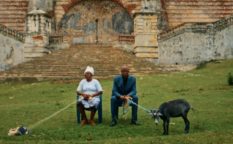
Blue Heart is the third instalment of a trilogy, with perspectives largely from those who have been left behind. The first Agew saw a mother wait with her child while her man had left, while Dreams Like Paper Boats reversed the roles and saw a father stay behind with a child. Now Blue Heart – which premiered at Directors Fortnight in 2025 and has just won the International Grand Prix at the Clermont-Ferrand International Competition – shifts the perspective to an elderly couple who silently wait for a phone call from their son, who has left to pursue the American Dream.
In many ways, the story of Blue Heart is universal. The act of leaving one’s parents and having said parents eagerly wait for some sign of life from their erstwhile offspring occurs in many cultures and countries, whether the children have moved just down the road or to another continent. Through this universality, Suffren subtly highlights the specifics of the Haitian situation.

The film vacillates between documentary-style footage of our parent protagonists – the mother, particularly ill, and father, who spend days in a routine waiting for a phone call – and Haitian society: A football game here, a taxi ride there. There’s a certain vibrancy here, an energy partly created by hubbub and chaos but also by the handheld camera work. It’s contrasted with the more sedate lives of our protagonists – using a sewing machine or trying to walk with great physical difficulty. Throughout, the angles are sometimes off-kilter, rendering everyone slightly cut off – while there is energy here, there’s a slight sense of things being off.
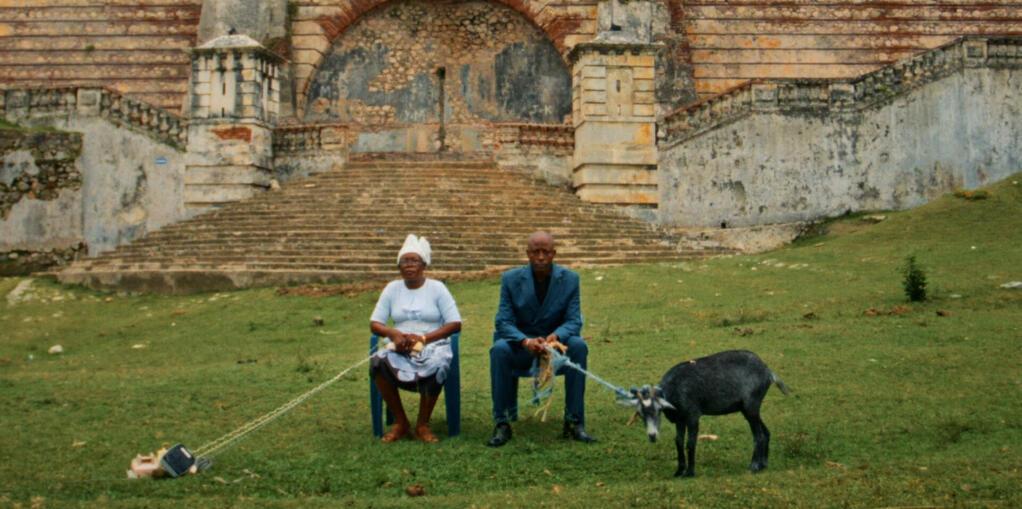
For all the film’s documentary trappings, Suffren adds a few dreamlike moments. A number of tableaux – a man on a horse listening to a rotary telephone held by a smoking woman – are striking and surreal. As much as life is governed by harsh reality, there are dreams abound – but is there too much of a gulf between these dreams and reality?
There’s a certain air of sadness in the film. The telephone becomes a symbol of absence, of lost lines of communication, and of cultural differences. It rudely interrupts – at first with demands for payment of a bill and later with silence at the end – rather than giving the comfort of knowledge and communication it should. For all the energy and vibrancy around, there is also a sense of stagnation and loss
Yet the film is not cynical and still offers hope – the bond between the mother and father is strong and loving, while there are moments of communication with the world at large. While absence is a loss, it is also a reminder of the possibility of hope, even for those left behind.
Year: 2025
Country: Haiti, France
language: Kreyól
Runtime: 15 mins
Director/ Screenwriter: Samuel Suffren
Producer: Kitfilms: Samuel Suffren
Co-producers: GoGoGo Films: Carine Ruszniewski, Louise Bansard
Director of photography: Samuel Suffren
Editor: Samuel Suffren
Executive producer: Phalonne Pierre Louis
Main Cast: Marie Diana, Arnold Joseph, Samuel Suffren
Sales: Square Eyes