ZagrebDox review: Closure (2026)
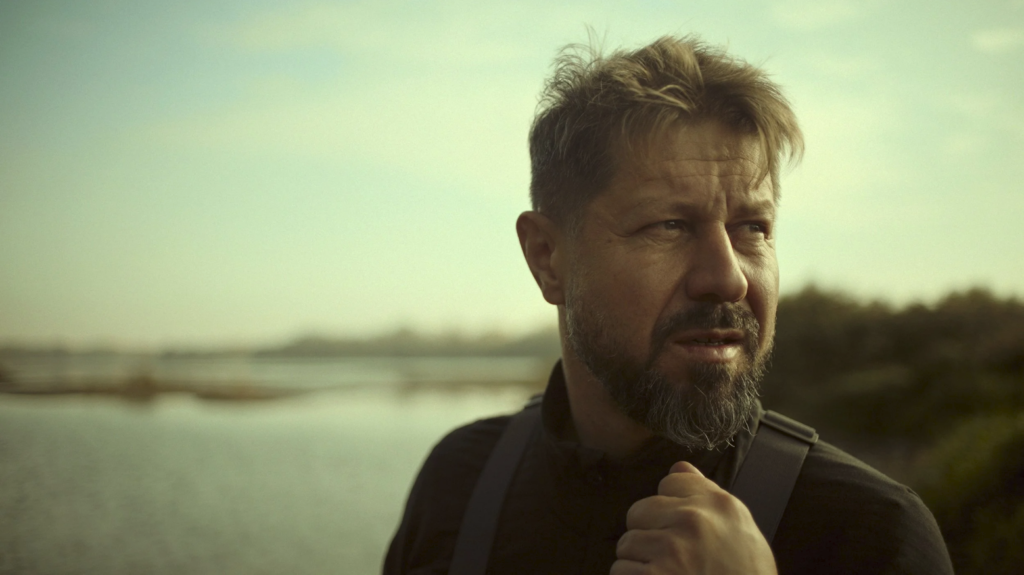
There is probably no greater stress than being a parent of a missing child. It is in the human nature to search for closure, whatever the outcome might be. That is what Daniel, the protagonist of Michał Marczak’s aptly titled newest documentary, does throughout the film.
Closure premiered at World Cinema Documentary competition at the last edition of Sundance that was held in Park City, Utah, and is on the tour of festivals since then. It was screened at True/False Film Festival, Thessaloniki Documentary Festival, Crossing Europe and ZagrebDox, where we caught it, while the next stops are scheduled for Millennium Docs Against Gravity in Poland, Sydney Film Festival and Sheffield DocFest.
Daniel’s son Krzysztof went missing, apparently out of the blue. He was last seen on a CCTV camera on a bridge over Vistula river in Warsaw, just before it turned to film the opposite angle. When it came back to its previous position, he was not in the picture. Did he jump? Did he walk away and met a different kind of fate in the swampy surroundings? Did he just leave? The police investigation stumbled upon a dead end, but the case got the national notoriety. However, all the alleged sights of Krzysztof all across the country turned out to be false leads. Another thing, no one can even guess why would he take such a radical action, and the answer might be buried in the digital graveyard of social media posts.
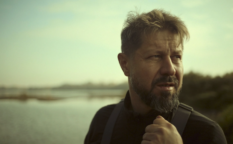
So Daniel conducts the investigation himself, with the help of his other son Patryk and others, including the filmmaker himself. He scours the riverbed with more and more sophisticated equipment in whatever the weather conditions might be, while his wife Agnieszka anxiously waits for the (bad) news at home. Daniel also gets called from other parents in similarly desperate situations to try to help them. He will never give up, but he is at the end of his strength.
The story of Krzysztof’s disappearance and Daniel’s search could make up for two opposite kinds of filmmaking – a true crime or confessional TV special that could serve as a cautionary tale on the topic of the challenges of contemporary parenthood and pitfalls of life in the digital sphere, or a “based on true events” psychological drama/thriller. Marczak is aware of that, and uses both of the aspects, almost equally. He relies on excerpts from an existing TV show to define the timeline of the son’s disappearance, the sloppy investigation by the police and the father’s search, while coating his documentary with a lot of genre fiction filmmaking along the lines of the “Scandi-noir” style like visibly filtered camerawork and sombre music on lower-register strings by four credited composers..
Sometimes, Marczak’s vision of Daniel’s struggle and the complete film seem too polished and along the lines of the genre to serve properly as a documentary. It does not take a film critic to recognise a string of reversed shots at a family dinner, or Daniel’s character arc that resembles the one of a troubled police inspector who, with his unusual method, excels at his work, but sacrifices his family- and personal life. Simply put, the film is visibly scripted, but that kind of unorthodox approach also has its own advantages.
To Marczak’s defence, he is willing to expose himself to a certain extent, as he is his own cinematographer and is following Daniel closely in his attempts. He does not step in front of the camera, but remains present as a voice that engages in conversation with his subject and asks genuine questions. By seeing the director’s “hand” at work, all the concerns of the genre approach taking over the truth in a documentary get eradicated. That way, Closure becomes a smooth and effective hybrid that simply works on both levels, as a document and as a movie.
Original title: Bez końca
Year: 2026
Runtime: 108 minutes
Countries: Poland, France
Language: Polish
Directed by: Michał Marczak
Written by: Michał Marczak
Cinematography by: Michał Marczak
Editing by: Anna Garncarczyk
Music by: William Basinski, Dirk Dresselhaus, Hildur Gudhnadóttir, Pawel Mikietin, Ilpo Välsänen
Sound design by: Michał Foczyk
Produced by: Michał Marczak, Katarzyna Szczerba, Rémi Grellety, Monika Braid
Co-produced by: Sara Skrodzka
Production companies: Subtext Studios, Braidmade Films
Co-production companies: Warboys Films, Bird Street Productions, Think-Film Impact Production
Supported by: Polish Film Institute, Mazowia Warsaw Film Commission, FINA, Canal+ Poland, France Télévisions, Against Gravity
Sales by: Autlook Filmsales